Regarding reported cases of leprosy in Norte de Santander, Colombia
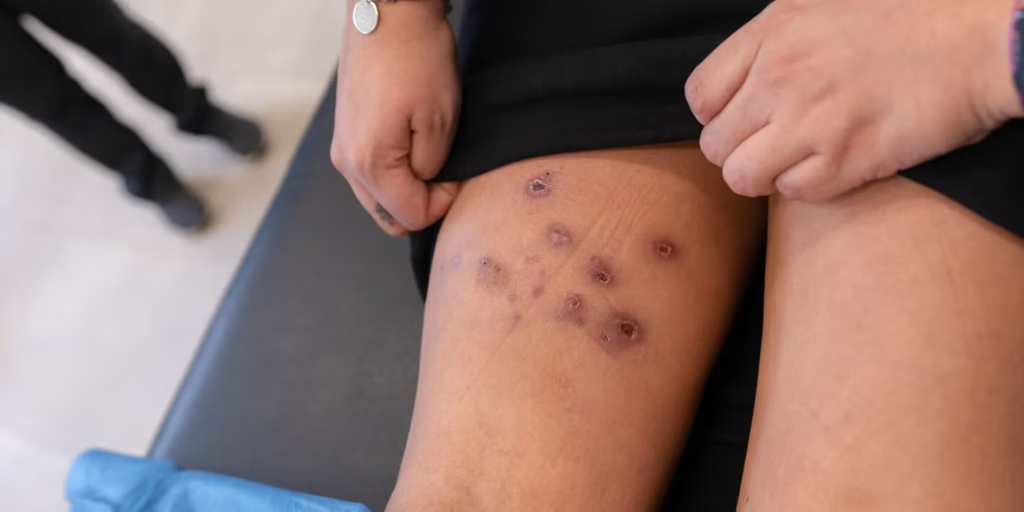
Fuente: https://www.paho.org/sites/default/files/styles/flexslider_full/public/2025-01/enfermedades-tropicales-desatendidas1.jpg?h=3b268d9a&itok=NkSCriX3
During 2025, 13 cases of leprosy have been confirmed in the department of Norte de Santander, Colombia, according to information from the Health Secretariat of Cúcuta, the department’s capital. The cases have occurred across different age groups.
The health authority reassured the population while also urging people to seek timely medical care if they experience symptoms compatible with the disease.
But have you ever wondered what leprosy, or Hansen’s disease, is? Here we explain it in a clear and simple way.
What is leprosy, or Hansen’s disease?
Leprosy is a chronic infectious disease that affects around 200,000 people worldwide each year. The earliest historical references consistent with this disease date back to the 15th century BC, in ancient texts from India
In 1873, Norwegian physician Gerhard Henrik Armauer Hansen identified the causative agent, which is why it is also known as Hansen’s disease. Leprosy is caused by a non-cultivable bacillus called Mycobacterium leprae
How is the disease transmitted?
Leprosy is transmitted mainly from person to person through the respiratory route, especially in settings of close and prolonged contact with individuals who have not started treatment. To a lesser extent, transmission through skin lesions or abrasions has also been described.
It is important to note that leprosy is not a highly contagious disease. In addition, leprosy can affect some animals, such as armadillos, although this route of transmission is rare.
What are the symptoms of the disease?
Symptoms may appear after a prolonged incubation period, which generally ranges from 3 to 5 years. The disease mainly affects the skin (lesions with loss of sensation), the peripheral nervous system, and the reticuloendothelial system, although it can also involve the bones, joints, eyes, testicles, and kidneys
If not treated in a timely manner, leprosy can cause long-term complications, including deformities and physical disabilities.
Is there treatment for the disease?
Yes. The physician who diagnoses the disease can start an effective antibiotic treatment, which leads to cure and rapidly reduces the risk of transmission
What should I do if I think I have leprosy?
If you experience symptoms compatible with the disease, seek medical attention immediately from your doctor or the nearest health service.
Links of interest
- https://www.ins.gov.co/buscador-eventos/Lineamientos/Pro_Lepra%202024.pdf
- https://www.laopinion.co/region/hay-riesgo-de-lepra-en-norte-de-santander-esto-dicen-las-autoridades-de-salud
- https://pubmed.ncbi.nlm.nih.gov/11998735/
Author
Gerhard M Acero
ESP epidemiology
Publication date: 09/02/2026
This post has not been sponsored