Ebola Virus Disease: A Threat Requiring Vigilance and a Timely Response
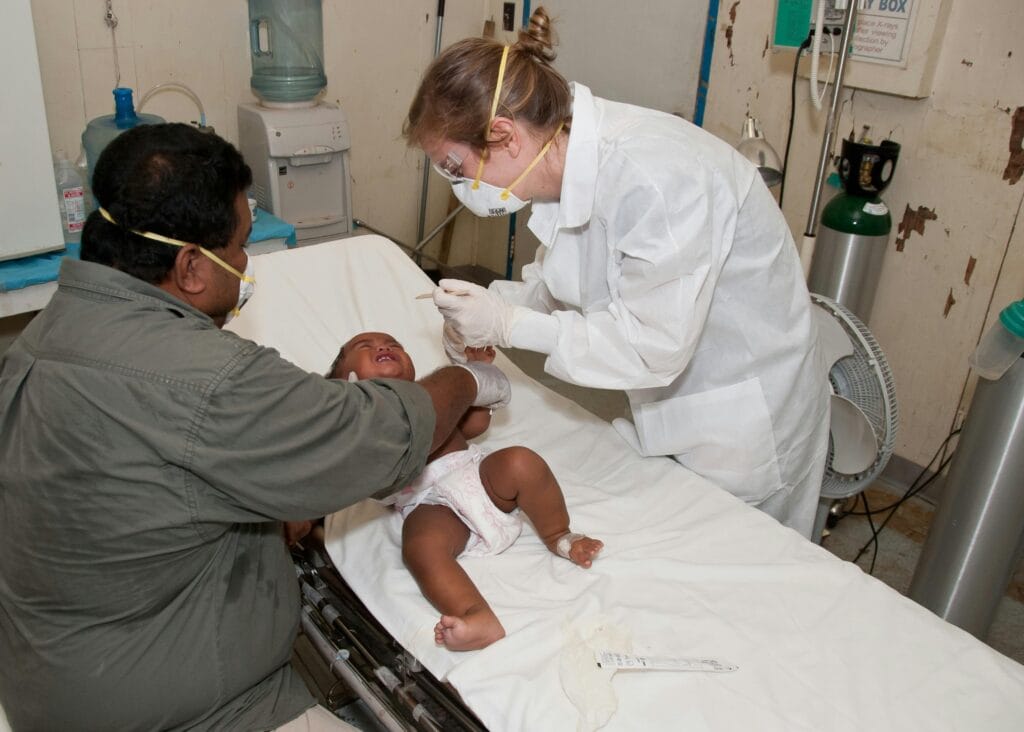
What Is Ebola Virus Disease?
Ebola virus disease is a rare but severe viral infection caused by different species of orthoebolavirus. The disease mainly affects humans and other primates and occurs most frequently in countries of sub-Saharan Africa. The case fatality rate has ranged from 25% to 90% across different outbreaks, with an average of approximately 50%.
Initial transmission to humans may occur through contact with infected wild animals. The virus then spreads between people through direct contact with the blood, secretions, organs, or other bodily fluids of a person who is ill or has died. It can also be transmitted through contaminated objects, such as needles, clothing, bed linens, or medical equipment. An infected person does not transmit the virus before developing symptoms.
The incubation period ranges from 2 to 21 days. Symptoms usually begin suddenly with fever, severe fatigue, muscle pain, headache, and sore throat. Vomiting, diarrhea, abdominal pain, skin rash, and impaired liver and kidney function may later develop. Although Ebola has traditionally been associated with bleeding, hemorrhagic manifestations do not occur in all patients.
What Is the History of Ebola?
The disease was first identified in 1976 during two outbreaks that occurred almost simultaneously in Nzara, a territory that is now part of South Sudan, and in Yambuku, in present-day Democratic Republic of the Congo. The disease was named after the Ebola River, located near the area where the second outbreak occurred.
In the following decades, periodic outbreaks were reported, mainly in countries in Central and East Africa. However, the event with the greatest international impact was the West African epidemic that occurred between 2014 and 2016. The outbreak began in Guinea and spread mainly to Liberia and Sierra Leone, while also causing cases in other countries. In total, more than 28,600 cases and 11,325 deaths were reported, making it the largest Ebola epidemic recorded to date.
What Is the Epidemiology of Ebola?
Ebola outbreaks have occurred mainly in sub-Saharan Africa. Some fruit bats are considered potential natural reservoirs of the virus, although the dynamics of transmission between animals and humans are still being investigated. Contact with infected animals, such as non-human primates or animals found dead, may facilitate the introduction of the virus into a community.
The emergence and spread of outbreaks may be facilitated by delayed case detection, population mobility, limited access to healthcare services, and population displacement. In 2026, an outbreak caused by the Bundibugyo virus was confirmed in the Democratic Republic of the Congo, with spread to Uganda, demonstrating that Ebola remains an event of international public health importance.
What Treatments Are Available?
Early treatment can considerably increase the likelihood of survival. Management includes the administration of fluids and electrolytes, maintenance of oxygenation and blood pressure, symptom control, and treatment of infections or other complications that develop during the course of the disease.
Monoclonal antibody treatments are also available for disease specifically caused by Ebola virus of the species Orthoebolavirus zairense. However, these medicines are not approved for all species capable of causing the disease. For example, no specific approved treatment is currently available for outbreaks caused by Bundibugyo virus or Sudan virus. Management therefore depends mainly on supportive clinical care and timely access to specialized health services.
Patients with suspected Ebola should be isolated and assessed under conditions that protect healthcare workers. Because the initial symptoms may be confused with malaria, typhoid fever, and other infectious diseases, confirmation requires specific laboratory tests.
How Can Ebola Be Prevented?
Prevention depends on early case detection, timely isolation, diagnostic testing, and monitoring of people who have had contact with a patient. Contacts should be monitored for 21 days to quickly identify the onset of symptoms and interrupt potential chains of transmission.
Healthcare workers must correctly use personal protective equipment and apply strict hygiene, disinfection, and safe waste-management measures. The bodies of people who have died may also remain infectious, so safe burial procedures that respect the cultural practices of communities must be followed. Unprotected contact with the blood, bodily fluids, or tissues of sick wild animals or animals found dead should also be avoided.
Effective vaccines are currently available against disease caused by the Zaire species of Ebola virus. During some outbreaks, these vaccines may be used through strategies such as ring vaccination, which targets contacts of confirmed cases and the contacts of those contacts. However, the available vaccine does not protect against all orthoebolavirus species, so epidemiological surveillance and control measures remain essential.
6. Conclusion
Ebola virus disease remains a public health threat because of its high case fatality rate and its capacity to cause outbreaks in communities with limited access to healthcare services. However, accumulated experience has shown that its spread can be controlled through a rapid, coordinated, and evidence-based response.
Strengthening epidemiological surveillance, protecting healthcare workers, monitoring contacts, maintaining transparent communication with communities, and ensuring early access to treatment are essential measures for reducing deaths and interrupting chains of transmission.
Links of interest
https://www.who.int/news-room/fact-sheets/detail/ebola-disease
https://www.cdc.gov/ebola/about/index.html
https://www.who.int/emergencies/situations/ebola-outbreak—drc-2026
Author
Gerhard M Acero
ESP epidemiologist
Publication date: 15/07/2026
This post has not been sponsored.